What is anxiety?
Learn more about anxiety – how common it is, as well as the signs and symptoms of anxiety. Discover when normal worry becomes anxiety and find effective coping strategies.
Read more
Breathing exercises are a simple tool to help reduce stress and anxiety. Here are a couple you can try.
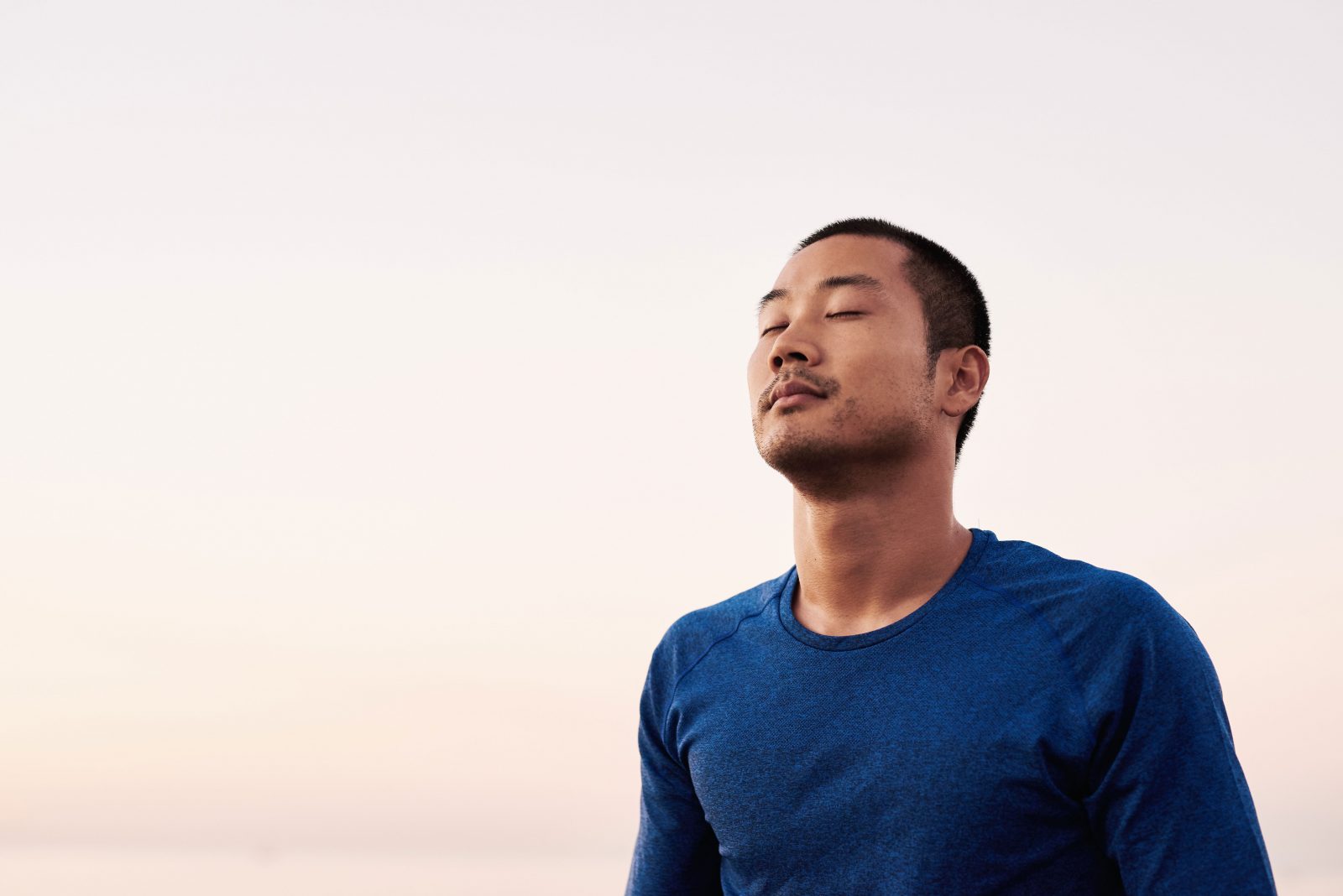
When you’re feeling stressed or anxious, your body can shift into ‘fight or flight’ mode. It’s a survival response that helps you react quickly when you’re in real danger. These days, though, it’s more often set off by everyday stressors like a disagreement, work pressure, or a traffic jam.
In this state, your breathing tends to become quick and shallow, and your heart rate rises, which can make feelings of stress and anxiety worse. When you’re relaxed, your breathing is slower and more even.
Breathing exercises are a simple way to interrupt a shallow breathing cycle. By slowing your breath down, you can help bring your body and mind back to a calmer state.
Studies have suggested that deep breathing is associated with an improvement in mood, focus and less stress1.
When you do breathing exercises, you may notice:2
There are many breathing techniques you can practise. Below are two examples you can try.
The easiest breathing technique to start with is to count your breaths.
When you’re doing the exercise, make sure you notice your breaths and the counting. If your mind wanders, gently guide it back to your breath and the counting.
You can set a timer on your phone beforehand or do a few repetitions of steps one through four.
Box breathing, also known as square breathing, is another fairly easy breathing exercise for stress and anxiety.
If four seconds is too hard to start with, you can try two seconds.
Repeat the exercise a few times until you start to feel relaxed. This exercise slows your breathing down and may help you feel calmer throughout your body.
You can practise deep breathing regularly, and in times of stress, to calm your body and mind. Do these exercises whenever you need to relax and lower your stress levels. By being mindful of your breath, you may notice reduced stress and anxiety and feel calmer inside and out.
If you’re finding it difficult to focus on your breath, there are lots of apps you can try. Popular apps include the free Australian app Smiling Mind, as well as Headspace and Calm.
If you’re still feeling stressed or anxious after trying deep breathing exercises, don’t be afraid to ask for help. Talking to your GP or a health professional will give you more ideas of how to reduce stress and anxiety in your life.

MensLine Australia offers free professional 24/7 telephone counselling support for men with concerns about mental health, relationships, anger management, family violence (using and experiencing), stress, and suicidal thoughts.
You can call our MensLine Australia counsellors on 1300 78 99 78, or click the chat button on the right for online counselling. MensLine is free and available 24/7.
If it is an emergency, please call 000.
References
1 Ma X, Yue Z-Q, Gong Z-Q, Zhang H, Duan N-Y, Shi Y-T, Wei G-X and Li Y-F (2017) The Effect of Diaphragmatic Breathing on Attention, Negative Affect and Stress in Healthy Adults. Front. Psychol. 8:874. doi: 10.3389/fpsyg.2017.00874
2 Better Health Channel, Dept of Health, Victoria State Government. Breathing to reduce stress https://www.betterhealth.vic.gov.au/health/healthyliving/breathing-to-reduce-stress
Learn more about anxiety – how common it is, as well as the signs and symptoms of anxiety. Discover when normal worry becomes anxiety and find effective coping strategies.
Read more
Breathing exercises are a simple tool to help reduce stress and anxiety. Here are a couple you can try.
Read more
You may have seen or heard the phrase high functioning anxiety more and more lately, but what does it mean? High-functioning anxiety describes those who experience many of the signs and symptoms of anxiety but contrary to the stereotype, seem to cope well with life and are often successful.
Read more
Have you felt intensely nervous, fearful or panicked when faced with social situations or events? If these feelings are persistent and recurring, you may be experiencing some of the symptoms and signs of social anxiety disorder, also known as social phobia.
Read more